Austin's Honky-Tonks Are Packed With Young Two-Steppers Again
Will Lisil
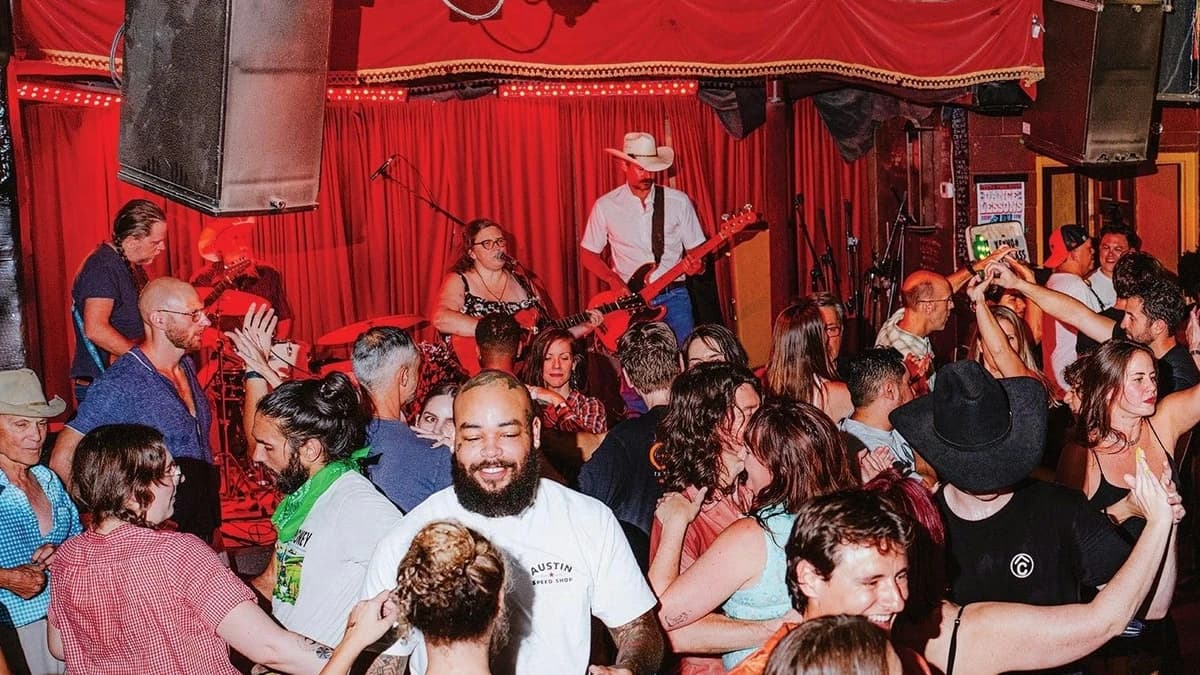
Austin's honky-tonks are full again, and the crowd on the dance floor is younger than many of the songs. On 14 November the second Honky Tonk Fest put its dance floor right in front of the main stage at Star Hill Ranch, in Bee Cave on the north-west edge of Austin, and the two-steppers made it the centre of the day. "The honky tonk is back. Two-step dancing is back," wrote Saving Country Music, which covered the festival.
The dancing is only half the story. The other half is what a reliable crowd of dancers does for the working bands who play to it, week in and week out.
A Festival Built Around the Dance Floor
Honky Tonk Fest is the idea of Bryan Parker, the executive editor of Austin Monthly. According to Saving Country Music's review, Parker spent six months researching the city's honky-tonks, including Sagebrush, the White Horse and the Broken Spoke, published a feature on the culture bubbling up there, and then wanted to keep the story going in a more active form. The festival is the result, and it has now reached its second year.
The review argues that a dance floor in front of a festival stage rarely works. At Austin's much bigger Two Step Inn Fest in April, it noted, the outdoor dance floors go virtually ignored. At Honky Tonk Fest the dancers were the main feature, with room left at the front and in the wings for people who simply wanted to watch.
The bill was built for them. The Sentimental Family Band opened the second stage with songs written from the ground up for two-steppers rather than retrofitted to them, which has made the group one of the best-loved bands to dance to in Austin and beyond. Kristina Murray, a Georgia native based in Nashville and a long-time Sunday-night regular at Santa's Pub in Music City, filled the floor from her first note. Kathryn Legendre, whom Saving Country Music has long called Austin's honky-tonk sweetheart, played the main stage on the back of an album called Here's Your Honky Tonk.
Three Scenes Share One Dance
Texas Monthly senior writer Josh Alvarez, who spent a year dancing in the city as often as six nights a week, describes three distinct two-step scenes in his August feature on the revival. The traditional dance halls, the Broken Spoke and Hill Country rooms such as Gruene Hall, keep the progressive two-step moving counterclockwise around a big floor, mostly for older couples. The country nightclubs, led by Maverick's Dance Hall in Pflugerville and Buda, use DJs and draw dancers in their twenties and thirties. The honky-tonk scene lives mainly at the White Horse, Sagebrush and Sam's Town Point.
That last scene is the one driving the revival. On the smaller honky-tonk floors, Alvarez writes, dancers move in place with knees bent, borrowing spins, tucks and waist wraps from swing, while the bands mostly play their own songs. The crowd is younger and more urban than at the old halls. The White Horse opened in East Austin in December 2011, and Sagebrush followed in 2020, giving regulars two rooms only a few miles apart.
The roots go back further. Tate Mayeux, one half of the duo Mayeux & Broussard, revisited the Hole in the Wall with Alvarez, the small Austin dive where he first saw a dancing crowd for bands such as Mike and the Moonpies in the mid-2000s. "This is where what we now call the dance scene began," Mayeux said.
How a Dance School Turned Beginners Into Regulars
Alvarez credits one person with turning the scene into a movement: Vanessa Vaught, an Austin native who founded Double or Nothing Two-Step. During the pandemic she secured a residency at Sagebrush before it reopened and posted Instagram reels breaking down spin-and-dip combinations step by step. Eighty people came to her first lesson in March 2021. She also began posting daily line-ups for Austin's honky-tonks so regulars could follow bands around town, and she estimates that 40,000 to 50,000 people have taken a Double or Nothing lesson over the past four years.
The format matters as much as the numbers. Lessons run at the venues before the bands start, so a newcomer can arrive alone, meet other beginners and dance to live music the same night. The company's press page describes a PBS segment, produced with Texas Monthly and aired on 30 August, in which Vaught explains the Austin style as a regional variation built for small dance floors, and the rule her lessons run on: anybody can lead, anybody can follow. A CBS Austin segment on the scene made the same point about access: there is a free lesson almost any night of the week, and no partner is needed.
A Dancing Crowd Keeps the Band Paid
This is where the revival becomes an economic story. Alvarez writes that by organising an army of cover-paying regulars, Vaught has boosted a live-music economy that supports local artists. Hayden Butler, a 35-year-old Austin native, has gone from small acoustic sets to the coveted 8pm and 10pm slots at honky-tonks around town. "Playing country-dance music pays my rent," he told Texas Monthly. At Honky Tonk Fest, Butler, who holds a Tuesday-night residency at Sagebrush, helped put together the house band that backed Pat Reedy, a Chicago-based singer who regularly travels down to play the White Horse and Sagebrush.
The demand travels, too. Singer-songwriter Paige Plaisance was invited to play Gottscheer Hall in Queens, New York, where dancers told her they had seen her in Austin, and Alvarez writes that musicians like her are getting new shots at touring. Aaron McDonnell, who has played honky-tonks in Baltimore, Chicago, Philadelphia and Seattle, told him that bookers in other cities are "definitely looking to Austin".
Taking part is cheap, which keeps the floor full. Saving Country Music made the case directly: "On any given night for cheap or free, you can have just as good of a time in a honky tonk as you can at one of those stadium or arena shows with three figure face value tickets, if not a better one."
Half the Bill Was Women, and the Rain Made the Best Set
When Summer Dean took the stage at Honky Tonk Fest, she pointed out that half the line-up was women and said she appreciated the festival not overlooking what women continue to contribute to traditional country music. Hannah Juanita came in from Nashville to close the second stage with her guitarist partner Mose Wilson, and Austin guitarist Monica Valli, who has built a large online following through her playing, gave a short slide-guitar clinic in the ranch chapel, where Tecovas had set up an acoustic room and a film crew.
Then the weather turned. A steady rain arrived halfway through the Deslondes' set, the main-stage show was eventually called off, and the headliners, the Austin band Rattlesnake Milk, carried their instruments and amps into one of the biggest buildings on the ranch and played an intimate set for the soaked crowd that stayed. The two-steppers found room at the back of the building and kept dancing. Honky Tonk Fest has said it tentatively plans to return to Star Hill Ranch next year.
Why the Revival Matters for Working Musicians
There is a pop-chart tailwind. Saving Country Music noted that the biggest song in all of music for the past 28 weeks is about two-stepping in a Texas honky-tonk, Ella Langley's Choosin' Texas, and asked whether the boom will outlast that hit and what it calls the Yellowstone effect. Only time will tell, the review conceded, but it noted that real moments shared in person are becoming more precious as online life feels increasingly hollow, and that the dance is a culture rather than a fad: "It’s a living, breathing culture that you can actively participate in."
Denis O'Donnell, who co-founded both the White Horse and Sagebrush, goes further. "The dancers in Austin may very well save country music from the three-decade onslaught of Nashville pop and bro country," he told Texas Monthly. Whether or not that happens, Austin's honky-tonks already show something useful for independent artists everywhere: when an audience turns up every week, pays a small cover and comes to dance, a local band can make a living without a hit.
At TipTop.music, our perspective is that direct support from listeners is what keeps working musicians working, whether it arrives as a cover charge on a Tuesday night in Austin or as a tip every time a song is played. The honky-tonk floor shows the same instinct: people paying, in small amounts and often, for music they value. We also believe there is room for every way of making music, with listeners choosing what they support. That view sits alongside many others, and Austin's dancers are a reminder of how much a committed audience can do.
Young listeners finding their way to an older sound is not only a Texas story; we saw the same pull when Milo J brought Argentine folk to a generation raised on trap. In Austin the doorway is a dance floor, and on most nights of the week there is a free lesson waiting just before the band plays.
Frequently asked questions
Where can you two-step in Austin?
The honky-tonk scene centres on the White Horse, Sagebrush and Sam's Town Point. The Broken Spoke and Hill Country halls such as Gruene Hall keep the traditional dance-hall style, and country nightclubs such as Maverick's Dance Hall use DJs.
What is Honky Tonk Fest?
A festival created by Austin Monthly executive editor Bryan Parker to celebrate the city's honky-tonk culture. Its second edition took place at Star Hill Ranch in Bee Cave on 14 November, and it tentatively plans to return next year.
Do you need a partner or experience to two-step in Austin?
No. Free lessons run on most nights, often at the venue before the band plays, and you can go alone. Double or Nothing Two-Step's lessons run on the rule that anybody can lead and anybody can follow.
How does the two-step revival help musicians?
Regular dancers pay covers and fill weekly slots, which supports local bands. Hayden Butler told Texas Monthly that playing country-dance music pays his rent, and bookers in other cities are looking to Austin acts.
Why are younger people taking up two-stepping?
Saving Country Music points to the value of real, in-person moments as online life feels increasingly hollow, along with a hit song about two-stepping in a Texas honky-tonk. Cheap nights and free lessons make it easy to start.