Funk Carioca Reached K-Pop Through a Splice Sample Pack
Will Lisil
There is a moment in a lot of recent pop records where the drums suddenly speed up, the low end gets heavier, and everything starts to bounce sideways. That is funk carioca, and it has been quietly rewiring how mainstream music sounds for the better part of a decade.
What makes the story worth telling is the route. This is a sound made in Rio de Janeiro's favelas, at parties thrown on borrowed sound systems, and it reached the biggest studios in the world partly because two producers uploaded some loops to the internet.
Where the Sound Actually Comes From
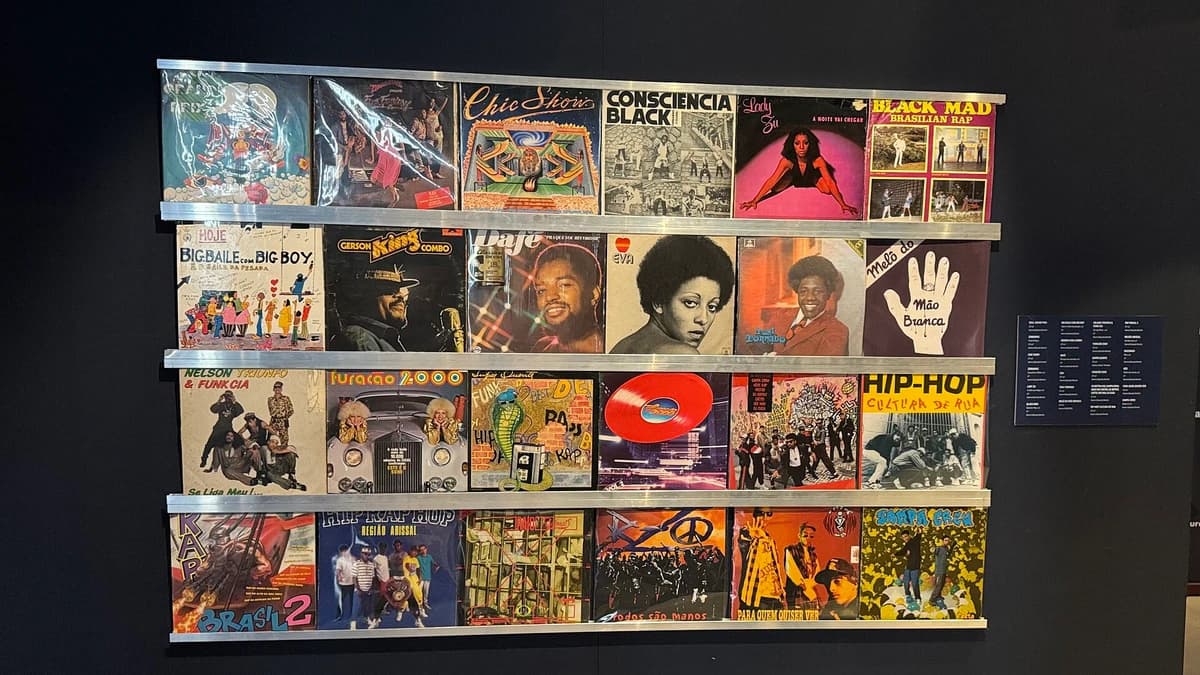
Funk carioca took shape in Rio de Janeiro from the 1980s, built out of Miami bass and American funk records that arrived in the city and got rebuilt for local dancefloors. It grew at the bailes, the sound-system parties that gave the music its name and its function, and it was made overwhelmingly by Black artists and producers from the city's peripheral neighbourhoods.
That origin has shaped everything about how the genre is heard. As Rio Times noted in a survey of the genre's global rise, funk spent decades pushing against suppression and criminalisation at home before winning mainstream acceptance, and it is now credited alongside sertanejo with driving Brazil's streaming growth. A music that had to argue for its own legitimacy at home is now one of the country's most recognisable exports.
What Makes a Funk Carioca Beat
Strip a track back and you find a few consistent ingredients. The rhythmic DNA comes from Miami bass, which gives the genre its punchy, syncopated kick pattern rather than the straight four-on-the-floor of house. Tempos run fast, with a good deal of the modern material sitting up around 150 beats per minute.
On top of that sits an unusually open palette. Producers pull in flute, atabaque, berimbau and piano alongside synthesisers and electronic drums, which is why two funk tracks can sound almost nothing alike while still being unmistakably the same genre. If you have read our piece on how every reggaeton song shares one drum pattern, this is the opposite situation: funk carioca is defined less by a single fixed pattern than by a feel and a bass weight.
The vocals matter as much as the drums. Call-and-response is central, and the MC is a live presence rather than a studio ornament, which is a direct inheritance from music built for a party rather than for headphones.
The Subgenres Worth Knowing
The genre is not one thing, and knowing the branches makes listening much more rewarding.
Mandelão is darker and more minimal, built on heavy, distorted low end. Bruxaria pushes further into the eerie and percussive, with clipped, hypnotic loops. Automotivo is the sound built for car sound systems, all impact and repetition. Brazilian phonk is the crossover strain that has travelled furthest on international platforms.
There are hybrids too. Funk-hall crosses the genre with dancehall, and funk techno pushes it towards the club. Alongside the music sits passinho, the footwork-heavy dance style that grew up with it and is a large part of how the sound spreads online.
Worth knowing alongside it is tecnobrega, a separate tradition from the Amazon region. It grew in the peripheral neighbourhoods of Belem, in Para state, powered by aparelhagens, enormous mobile sound systems that work much as Rio's bailes do, and it blends techno with rock drum patterns and traditional Amazonian sound. Its reach has been quietly wide: Pet Shop Boys featured a Waldo Squash tecnobrega remix and drew on the genre on their 2016 album Super, Miss Tacaca played the UK's Boiler Room, and DJ Necropsycho has taken the sound as far as festivals in India.
How the Drums Ended Up in K-Pop
Here is the route that surprises people. The Brazilian production duo Tropkillaz, made up of Andre Laudz and Ze Gonzales, uploaded funk loops to the sample platform Splice. Those loops were then picked up and used by K-pop artists, and Tropkillaz went on to produce original beats for K-pop records directly, including work with aespa and a TXT collaboration.
Remezcla's account of the genre's global spread traces that pipeline in detail, along with a long list of other crossings: Beyonce sampling baile funk, Drake remixing Kevin O Chris's "Ela e do tipo", Tove Lo featuring MC Zaac, and funk remixes involving Maluma and Karol G.
That same piece quotes Professor Thiago de Souza on why the genre took so long to be filed as electronic music at all: "People tend to associate music genres with social groups... electronic music... for white, middle-class European people. But funk is made mainly by Black people." The sample pack, in that light, did something quietly radical. It let the rhythm travel on its own merits, without needing permission from anyone's genre category.
The Artists to Start With
If you are coming in cold, a few names give you the range quickly.
Anitta is the most globally recognised figure, and her album Funk Generation is the clearest statement of the genre made for an international audience. Ludmilla fills arenas in Brazil and moves comfortably between funk and pop. Pedro Sampaio works as both artist and producer and is one of the people shaping what the current mainstream version sounds like.
From there, Kevin O Chris is essential for the faster, 150-bpm end of things, MC Fioti for the crossover instinct that produced "Bum bum tam tam", and MC Zaac and Dennis DJ for the production side. Bibi Babydoll is worth adding if you want something closer to the current club sound.
What the Scene Sounds Like Right Now
Talk to people making it and the mood is one of expansion rather than preservation. In Dazed's 2026 survey of young Brazilians working in the genre, the producer and DJ RD DA DZ7 described a scene splitting productively in two directions: "Funk is evolving... Some bring back old baile elements... Others are on a fast-forward move."
The DJ Ray put the appeal in simpler terms in the same piece, describing what happens in the room: "When I play funk, I have this feeling of community, of celebration." And DJ Vicx offered the gentlest possible challenge to new listeners, noting that many people outside Brazil "just feel the genre without knowing its history".
The wider culture has been catching up. A musical drama titled Funk premiered at the Tribeca Film Festival this year, following a young woman's rise through the scene.
Where to Begin Listening
Start with one track from each branch rather than a greatest-hits playlist. Take something from Funk Generation for the polished international version, a Kevin O Chris record for the 150-bpm rush, and a mandelao or bruxaria track for the raw, low-end version that most international listeners never reach.
Then do the thing DJ Vicx was asking for and read a little about where the sound came from. Funk carioca rewards that, because the details you learn are audible: once you know the beat is built on Miami bass rather than house, once you can hear a berimbau under a synth line, the whole genre opens up. It has spent forty years being underestimated and it is currently sitting inside records made on the other side of the planet. That is a good enough reason to listen properly.
This article was AI-assisted and edited for accuracy.
Frequently asked questions
What is funk carioca?
Funk carioca is a Brazilian dance genre that took shape in Rio de Janeiro from the 1980s, built on Miami bass and American funk influences and developed at baile sound-system parties in the city's peripheral neighbourhoods.
How is funk carioca different from American funk?
Despite the shared name, funk carioca is an electronic dance genre. Its rhythmic foundation comes from Miami bass, with syncopated kick patterns, heavy low end, fast tempos often around 150 bpm, and call-and-response vocals from an MC.
What are the main subgenres of funk carioca?
Mandelao is darker and more minimal, bruxaria is eerier and more percussive, automotivo is built for car sound systems, and Brazilian phonk is the strain that has travelled furthest internationally. Funk-hall and funk techno are hybrid styles.
How did funk carioca reach K-pop?
The Brazilian duo Tropkillaz uploaded funk loops to the sample platform Splice, where K-pop producers picked them up. Tropkillaz later produced original beats for K-pop records, including work with aespa and a TXT collaboration.
Which funk carioca artists should I listen to first?
Anitta's Funk Generation is the clearest international entry point. Ludmilla and Pedro Sampaio show the mainstream Brazilian version, while Kevin O Chris, MC Fioti, MC Zaac and Dennis DJ cover the faster and more production-led ends of the genre.