Hybrid Producers and Stable Audio: Redefining Fairness in Music
Will Lisil
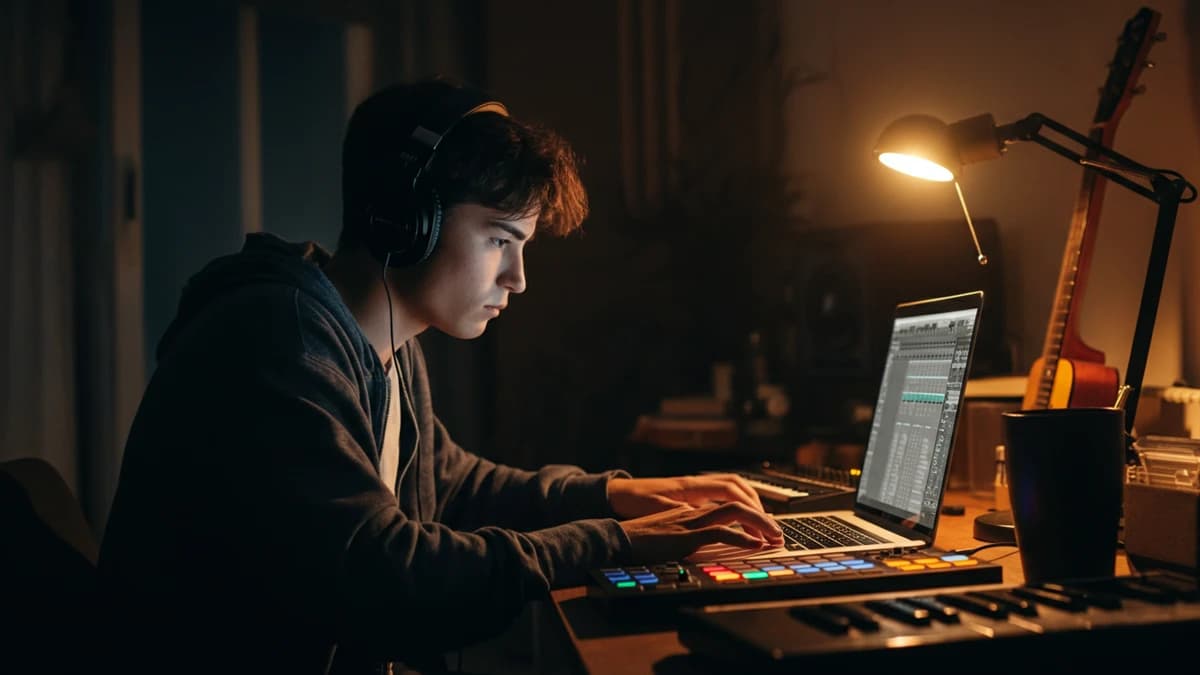
The New Sound of Creation: Who Are Hybrid Producers?
The music industry is in the midst of another technological sea change. Just as synthesizers and samplers redefined popular music decades ago, generative artificial intelligence is now entering the studio, not as a replacement for artists, but as a powerful new instrument. At the forefront of this movement are "hybrid producers": creators who seamlessly blend traditional musicianship with cutting-edge AI tools. These artists aren't just pushing a button and releasing the output; they are composers, curators, and sound designers who use AI as a collaborator. The rise of hybrid producers using stable audio and similar technologies is forcing a crucial conversation about what constitutes art, who owns it, and how creators should be paid in this new economy.
A hybrid producer might use an AI model to generate a unique atmospheric texture for a track, create a complex drum pattern that would take hours to program manually, or transform a simple vocal melody into a rich, layered harmony. They are still writing, arranging, mixing, and mastering. The AI becomes part of the creative palette, a tool for inspiration and execution. Platforms like Stability AI's Stable Audio are central to this shift, offering sophisticated capabilities that were once the exclusive domain of high-end software and sound libraries.
The Power and Potential of Tools Like Stable Audio
Released by Stability AI, Stable Audio represents a significant leap in generative audio technology. It allows users to create high-quality, full-length instrumental music and sound effects using simple text prompts. Want a "cinematic, uplifting trance track with a driving beat at 130 BPM"? Or a "calm, ambient soundscape of a rainforest at dawn"? The model can generate it in seconds. Its audio-to-audio feature also allows producers to upload their own recordings and transform them, opening up endless possibilities for remixing and sound design.
This technology, alongside competitors like Suno and Udio, is a powerful democratizing force. It lowers the barrier to entry for aspiring musicians who may not have access to expensive instruments, session players, or sprawling recording studios. For established artists, it offers a way to break through creative blocks and rapidly prototype ideas. Artists like Holly Herndon and Grimes have long experimented with AI, exploring its potential for vocal synthesis and collaborative composition. Now, tools like Stable Audio are making these experimental techniques accessible to a much broader community of creators, fueling the growth of hybrid producers using stable audio as a core part of their workflow.
The Great Debate: Creativity, Copyright, and Compensation
The rapid adoption of generative AI in music has ignited a fierce debate across the industry. The core issues revolve around three interconnected pillars: creativity, copyright, and compensation.
Creativity: A common criticism is that AI-generated music lacks the "soul" or "intent" of human creation. However, hybrid producers argue that the artistry lies in the process. The choice of prompts, the curation of generated outputs, the editing, layering, and mixing—these are all deeply creative human decisions. The AI is a powerful paintbrush, but the producer is still the painter. The final work is a product of their vision and skill, not just the algorithm's calculation.
Copyright: This is perhaps the most complex legal and philosophical battleground. The U.S. Copyright Office has issued guidance stating that works created solely by AI without human authorship are not eligible for copyright protection. However, the situation for hybrid works—where human creativity is intertwined with AI generation—is far murkier. Who owns the final track? The producer? The AI company? Does it matter what data the AI was trained on? These questions are being actively litigated and debated, with figures like Ed Newton-Rex, a former executive at Stability AI, now advocating for stricter controls and ethical data sourcing.
Compensation: For many working musicians, the primary fear is economic devaluation. Organizations like the Artist Rights Alliance have warned that a flood of AI-generated content could dilute streaming royalty pools and depress the value of human-created music. If a company can generate a thousand royalty-free background tracks for its marketing videos in an hour, what happens to the composers who previously made a living from that work? This concern is real and speaks to the urgent need for new economic models that can fairly accommodate all types of creation, a topic frequently covered by outlets like Billboard and Music Business Worldwide.
Distinguishing Creation From Fraud: A Critical Clarification
In the heated discourse surrounding AI, it's crucial to make a clear distinction between the act of creating music with AI tools and the fraudulent act of using bots to generate fake streams. These are two fundamentally different issues that are often conflated.
Using Stable Audio or Suno to compose a song is an act of creation. It involves artistic intent, skill, and effort. The person behind the prompts and the final mix is a creator, a musician exploring a new medium. Their work is intended for human listeners to enjoy, critique, and connect with.
Fake streams, on the other hand, are a purely fraudulent enterprise. This involves using automated scripts or "click farms" to generate millions of bogus plays on streaming platforms. The goal is not artistic expression but to illegitimately siphon money from the royalty pool, stealing from every legitimate artist on the platform. Conflating a hybrid producer's work with a streaming fraudster's scheme is a mistake. One is a new form of artistry; the other is simple theft. Tackling streaming fraud is a technical and legal challenge that is separate from the conversation about how to integrate AI-assisted art into the music ecosystem.
A Path Forward: Transparency and Listener Choice
Instead of attempting to ban or gatekeep AI-assisted music, a more productive path forward may lie in transparency and listener empowerment. If the industry can agree on clear and consistent labeling standards, fans can make informed choices about the music they support. A track could be labeled based on its components—fully acoustic, electronic, AI-assisted, or fully AI-generated—giving listeners the context they desire without passing judgment on the creation method itself.
At TipTop.music, our perspective is that all methods of music creation are valid and deserving of a place in the ecosystem. We believe the focus should not be on policing how art is made, but on ensuring every creator is compensated for real engagement from real listeners. We champion a system of clear labeling by sound type, allowing listeners to use filters to find and tip the music they personally value. This approach respects both the artist's creative freedom and the listener's right to choose, fostering a more inclusive and fair music economy for everyone.
This model reframes the debate. The question is no longer whether a song is "real" or not, but whether a listener finds value in it. As publications like Rolling Stone and The Verge continue to document, this cultural and technological shift is already underway.
The debate over fair compensation has become urgent, with new data revealing the shocking scale of AI music and stolen royalties through bot activity.
Join the New Music Economy
The emergence of hybrid producers using stable audio is not a threat to be feared, but an evolution to be understood. It challenges our old definitions and forces us to build more flexible, transparent, and equitable systems. The future of music will not be human versus machine, but human *with* machine. The task for the industry—from platforms to labels to listeners—is to create an economic framework that honors creativity in all its forms and ensures that every play from a real fan translates into fair pay for the creator.
For artists exploring these new frontiers and looking for a platform that values every type of creation, the new music economy is waiting. It's an economy built on direct support, transparency, and a fundamental respect for the creative process, however it may unfold.
Frequently asked questions
What is a hybrid music producer?
A hybrid music producer is a creator who combines traditional music production techniques (like playing instruments, singing, and mixing) with generative AI tools like Stable Audio. They use AI as a creative partner to generate sounds, melodies, or textures, which they then curate, edit, and integrate into their final track.
Is using AI tools like Stable Audio considered cheating in music?
This is a subject of debate, but many in the industry view AI as another tool, similar to a synthesizer or sampler. The creativity comes from the artist's prompts, curation, and how they integrate the AI-generated elements into a cohesive piece. It's a new form of artistry, not a shortcut that eliminates skill.
Who owns the copyright to music made with AI?
Copyright law for AI-assisted works is still evolving. The U.S. Copyright Office has indicated that works with significant human authorship are eligible for protection, but the exact lines are blurry. This is a major legal and ethical question the music industry is currently working to resolve.
How is using AI to make music different from fake streams?
Using AI to create music is an artistic process with the goal of creating something for human listeners. Fake streams are a fraudulent activity where bots are used to generate millions of illegitimate plays to steal money from royalty pools. One is a form of creation; the other is a form of theft.