The $8 Million Streaming Fraud Conviction: Why Every Fake Stream Steals From Real Artists
Will Lisil
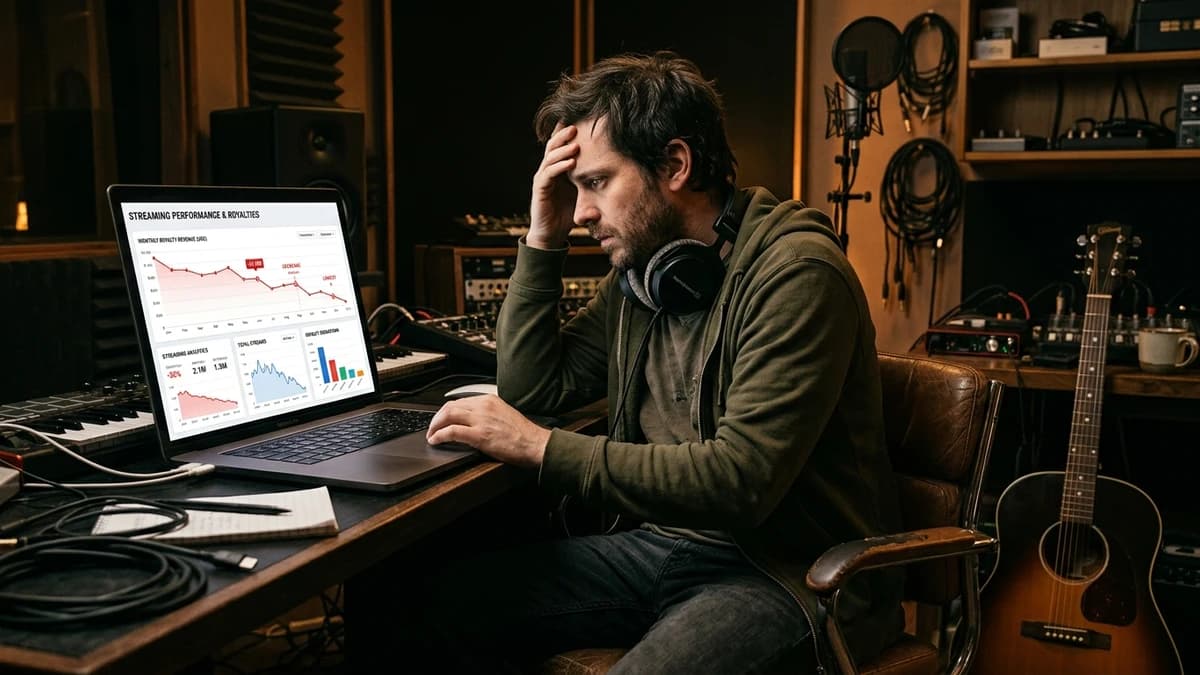
The streaming fraud conviction that just shook the music industry proves what independent artists have suspected for years: the system is broken. On March 19, 2026, Michael Smith — a 54-year-old from North Carolina — pleaded guilty to stealing over $8 million in royalties from real artists by flooding streaming platforms with hundreds of thousands of AI-generated songs and billions of fake streams. It's the first-ever criminal prosecution for AI-assisted streaming fraud in the United States, and the implications reach far beyond one man's scheme.
While Smith faces up to five years in prison and $8 million in forfeiture, the deeper question remains: how did one person siphon millions from real musicians for seven years before anyone noticed? The answer lies in the pro-rata royalty model — the same system that Spotify uses to distribute its record $11 billion in payouts. It's a model where every fake stream dilutes every real artist's earnings. And it's exactly the problem that tip-based platforms like TipTop.Music are designed to eliminate.
How One Man Stole $8 Million From Real Artists
According to the U.S. Department of Justice, Michael Smith's operation ran from 2017 to 2024 — seven years of systematic theft from every legitimate musician on the platforms he exploited.
His method was devastatingly simple:
- Generate the catalog: Smith used AI to create hundreds of thousands of songs — not music anyone would choose to listen to, but tracks that existed solely to collect royalties.
- Build the bot army: He created thousands of fake accounts on Spotify, Amazon Music, Apple Music, and YouTube Music.
- Stream at scale: Automated software made his bot accounts continuously stream his AI songs, generating billions of plays.
- Avoid detection: By spreading streams across thousands of songs, no single track showed anomalous numbers.
"Although the songs and listeners were fake, the millions of dollars Smith stole was real," said U.S. Attorney Jay Clayton. "Millions of dollars in royalties that Smith diverted from real, deserving artists and rights holders."
Smith pleaded guilty to conspiracy to commit wire fraud and agreed to forfeit $8,091,843.64. Sentencing is scheduled for July 29, 2026, with a maximum of five years in prison.
The Core Problem: Every fake stream doesn't just pay the fraudster — it actively reduces what every real artist earns. Smith's billions of bot plays meant billions of micro-deductions from the earnings of artists who were actually creating music people wanted to hear.
How Fake Streams Steal From Artists: The Pro-Rata Problem
To understand why this streaming fraud conviction matters to every musician, you need to understand how the pro-rata royalty model works — and why it's structurally vulnerable to manipulation.
Here's the math: Platforms like Spotify pool all subscription and advertising revenue into one pot. That pot gets divided proportionally based on total streams across the entire platform. If your song represents 0.001% of all streams, you get 0.001% of the money.
The problem? Fraudulent streams inflate the denominator. When Smith generated billions of fake streams, he didn't create new money — he claimed a share of the existing pool. Every fake stream made every real stream worth slightly less.
Consider a simplified example:
- Without fraud: $100 million pool ÷ 100 billion real streams = $0.001 per stream
- With Smith's fraud: $100 million pool ÷ 105 billion streams (including 5 billion fake) = $0.000952 per stream
That 5% dilution might seem small per stream — but multiply it across every legitimate artist on the platform, and you're talking about millions of dollars redirected from real musicians to a fraudster.
This isn't a bug in the system. It's a fundamental design flaw. The pro-rata model was built for an era when all streams came from real listeners. In 2026 — with AI able to generate music at industrial scale and bots able to simulate realistic listening — the model is structurally broken.
The Industry's Response: Too Little, Too Late?
The music industry is finally treating streaming fraud as a crisis:
- Apple Music flagged 2 billion fraudulent streams in 2025 and doubled its fraud penalties in February 2026
- Deezer now logs 75,000 AI-based tracks per day — and the number is growing
- Spotify has invested in AI-powered fraud detection and penalizes distributors with suspicious catalogs
- IFPI is pursuing legal action against streaming fraud operators in Brazil and other markets
But detection is always playing catch-up. As ArtistRack's investigation into Streaming Fraud 2.0 revealed, modern fraud networks use "Ghost Listeners" — AI-generated user profiles with realistic listening histories, geographic diversity, and varied genre preferences. These sophisticated bots are far harder to detect than Smith's relatively crude operation.
The fundamental question isn't whether platforms can detect more fraud — it's whether the underlying business model creates an incentive structure that makes fraud inevitable.
"With streaming royalties based on the pot of money generated by DSPs from subscriptions and advertising, any part of that diverted to fraudulent operators means less income for real artists and songwriters as well as rights-holders." — Music Week, April 2026
Why Tip-Based Platforms Eliminate Fraud Entirely
The streaming fraud problem is a model problem, not just a detection problem. And the solution isn't better fraud detection — it's better economics.
On traditional streaming platforms, your subscription fee gets pooled and divided among all artists based on total platform streams. You might listen exclusively to indie jazz, but your money subsidizes pop megastars and — as Smith proved — fraudsters.
Tip-based models like TipTop.Music work fundamentally differently:
- Every play costs 1 cent. There's no pool. When you play a song, your money goes directly to that artist.
- 67% goes to the artist. Not after complex pool calculations — directly, transparently, traceable.
- No play = no tip = no cost. Bot accounts would need to spend real money on credits for every fake stream. At 1 cent per play, generating billions of streams would cost millions — making fraud economically irrational.
- Credits never expire. Listeners buy credits ($10 = 1,000 plays) and use them at their own pace. Every credit spent goes to an artist the listener chose.
The math makes fraud impossible by design. On Spotify, Smith's bots streamed for free (fake accounts don't pay subscriptions but still generate royalty-qualifying streams through the platform's free tier and algorithmic playlists). On a tip-based platform, every stream requires a real financial commitment — and that commitment goes directly to the artist, not a shared pool.
The Direct-to-Fan Revenue Revolution
Smith's conviction is accelerating a broader shift in how artists think about income. More independent musicians in 2026 are treating streaming as discovery, not income — and building direct-to-fan revenue streams that can't be diluted by fraud.
According to ArtistRack's 2026 analysis, five revenue channels consistently outperform Spotify royalties for independent artists:
- Direct-to-fan memberships: 200 fans at $5/month = $1,000 — versus 300,000 monthly Spotify streams for the same amount
- Sync licensing: A single micro-sync placement pays $500-$2,000 upfront
- Limited physical releases: 100 vinyl records at $45 each beats a million streams
- Hybrid shows: Physical venue + virtual tickets = scalable revenue beyond venue capacity
- Tip-based platforms: Direct per-play payments where every stream has real value for the artist
On TipTop.Music, playlisters also earn: curators receive 10% of all tips paid to artists through their playlists — the only platform where curation generates revenue. This creates a legitimate ecosystem where discovery, listening, and earning are all aligned around real value exchange.
What Independent Artists Should Do Now
The streaming fraud conviction is a wake-up call. Here's what every independent artist should consider:
Protect Your Earnings
- Monitor your per-stream payouts: Sudden drops may indicate increased fraud diluting the royalty pool
- Avoid "guaranteed streams" services: Any promotion promising specific stream counts is almost certainly using bots — and you could face penalties
- Report suspicious activity: If you notice unusual streaming patterns on your tracks, notify your distributor and the platform immediately
Diversify Your Revenue
- Build direct fan relationships: Email lists, Discord communities, and direct-to-fan platforms put you in control
- Explore tip-based platforms: Where every play generates a direct payment, fraud economics don't work
- Don't rely on one income stream: The artists thriving in 2026 have 3-5 revenue sources, not just streaming
Advocate for Systemic Change
- Support user-centric payment models: Where your fans' money goes only to artists they actually listen to
- Push for transparency: Demand clear reporting on how platforms detect and penalize fraud
- Join artist organizations: Collective advocacy amplifies the call for fair compensation models
The Verdict: Streaming Needs a New Model
Michael Smith's guilty plea is a milestone — but it's treating a symptom, not the disease. As long as streaming royalties come from a shared pool divided by total plays, the incentive to generate fake streams will persist. Better detection helps, but the AI-vs-AI arms race between fraud generators and fraud detectors has no finish line.
The alternative is a model where fraud is economically impossible — where every play requires real money and that money goes directly to the artist. That's not a future concept. It exists today on platforms built around direct artist tipping, transparent earnings, and the simple principle that no tip means no play means no inflated numbers.
For the millions of independent artists watching Smith's sentencing in July, the question isn't whether the old model is broken. The question is how quickly the industry will build something better.
Start Tipping Artists Today
On TipTop.Music, every play is a real tip — 67% goes directly to the artist. No fake streams. No shared pools. Just real music, real fans, real earnings.
Explore TipTop.MusicFrequently asked questions
What happened in the 2026 streaming fraud conviction?
Michael Smith, 54, of North Carolina pleaded guilty on March 19, 2026 to the first-ever criminal prosecution for AI-assisted streaming fraud. He used AI to generate hundreds of thousands of fake songs and bot accounts to stream them billions of times on Spotify, Apple Music, Amazon Music, and YouTube Music, stealing over $8 million in royalties. He faces up to five years in prison and agreed to forfeit $8,091,843.64.
How do fake streams steal money from real artists?
Streaming platforms use a pro-rata model where all revenue is pooled and divided by total streams. When fraudsters inflate total stream counts with billions of fake plays, they claim a share of the pool — directly reducing the per-stream payout for every legitimate artist. Smith's scheme didn't create new money; it redirected millions from real musicians' earnings.
Can a music platform be designed where fake streams are impossible?
Yes. Tip-based platforms like TipTop.Music eliminate fraud by design: every play costs 1 cent of real credits, 67% goes directly to the artist, and there's no shared pool to dilute. Bot accounts would need to spend millions in real money to generate fake streams — making fraud economically irrational. No tip means no play means no inflated numbers.
What should independent artists do to protect themselves from streaming fraud?
Monitor per-stream payouts for sudden drops (indicating increased fraud), avoid any 'guaranteed streams' service (almost certainly bot-powered), diversify revenue through direct-to-fan channels and tip-based platforms, and report suspicious streaming patterns to your distributor. The artists thriving in 2026 have 3-5 revenue sources, not just traditional streaming.
How much do artists actually earn per stream on traditional platforms?
Average payouts range from $0.003 to $0.005 per stream on major platforms — meaning artists need 200,000-300,000 monthly streams to earn $1,000. On tip-based platforms, every play generates a direct 1-cent payment with 67% going to the artist (0.67 cents per play), providing transparent and predictable income that can't be diluted by fraudsters.