Inside the London Jazz Scene: a Listener's Guide to the New Wave
Will Lisil
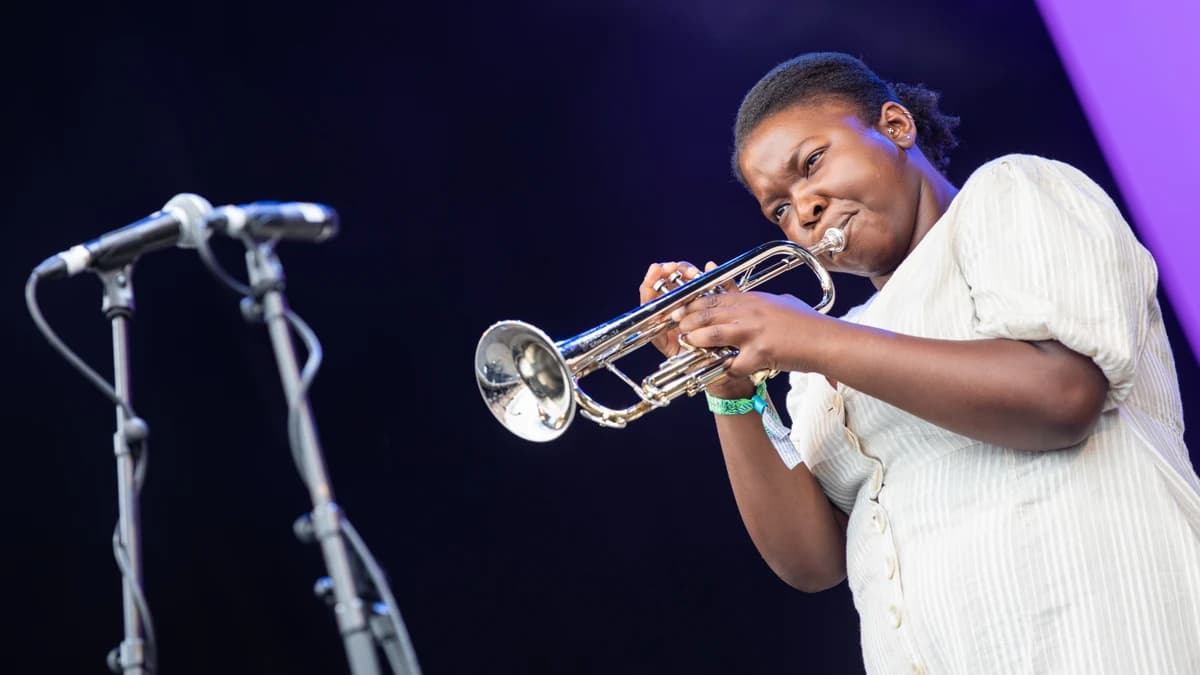
The London jazz scene is in the middle of a moment that has already lasted a decade, and it shows no sign of cooling. A generation of young, largely independent players has turned the city into a place where jazz feels urgent, danceable and completely its own, pulling in afrobeat, grime, hip-hop, dub and deep West African and Caribbean roots. For a listener discovering it now, there has rarely been a better time to dive into what many now call a full-blown jazz renaissance.
This is a guide to how the scene came together, the artists worth hearing first, the rooms where it lives, and the sold-out festival that brings it all together in the summer of 2026.
How London Became a Jazz City Again
The current wave did not appear from nowhere. Much of it traces back to Tomorrow's Warriors, the youth development programme co-founded by bassist Gary Crosby, which mentored a remarkable number of the scene's leading names, often for free, and deliberately widened access for young Black and female musicians. Around that spirit grew a network of grassroots spaces, most famously the Total Refreshment Centre in Hackney and the long-running Jazz re:freshed nights, where players could experiment in front of open-eared crowds.
What makes the London jazz scene distinct is that its musicians grew up on far more than jazz. They came up on grime, afrobeat, dub, hip-hop and their families' record collections, and they carried all of it onto the bandstand. The result is music with the harmonic depth of jazz and the physical pull of a club night, made by people who see no wall between a Sons of Kemet gig and a warehouse rave.
A turning point came in 2018, when Gilles Peterson's Brownswood label released a compilation called We Out Here, curated by Shabaka Hutchings, that gathered nine of these young bands onto a single record and introduced the whole scene to the world at once. The title stuck so firmly that it later christened the festival. Just as important were the weekly sessions that gave the music a home: Steam Down's night in Deptford and Church of Sound, staged inside a Clapton church, turned jazz into a communal, come-as-you-are ritual rather than a museum piece. On any given night a teenager hearing live improvisation for the first time might be standing shoulder to shoulder with a seasoned record collector, and that mix is exactly the point.
The Artists Leading the New Wave
If you are starting out, a handful of names map the territory. Ezra Collective, the quintet led by drummer Femi Koleoso, made history in 2023 as the first jazz act ever to win the Mercury Prize, for their album Where I'm Meant to Be, a record built to make people dance. Saxophonist and composer Nubya Garcia broke through with her 2020 debut Source, weaving cumbia, dub and neo-soul into something unmistakably her own.
Drummer Moses Boyd won wide acclaim for the restless, electronic-leaning Dark Matter, while saxophonist Shabaka Hutchings became the scene's most visible export through his bands Sons of Kemet and The Comet Is Coming. Around them orbit a deep bench of talent, from the collective Steam Down in Deptford to vocalist Yazmin Lacey and guitarist Oscar Jerome. The joy of the scene is how much these players share stages and records, so following one name quickly leads you to a dozen more.
The bench runs remarkably deep. Kokoroko, the eight-piece led by trumpeter Sheila Maurice-Grey, channels West African highlife into some of the scene's warmest, most joyful grooves. Keyboardist and producer Alfa Mist folds jazz into hip-hop introspection; multi-instrumentalist Emma-Jean Thackray plays almost every part herself on records like Yellow; and drummer Yussef Dayes and keyboardist Kamaal Williams reshaped the sound as the duo Yussef Kamaal before both built acclaimed solo careers. Joe Armon-Jones moves between Ezra Collective and a restless catalogue of his own, while tuba player Theon Cross gives the low end a swagger all its own. None of these names is a dead end; each one opens onto three or four more.
Where the Scene Lives: Clubs, Nights and Incubators
The music is best met in person. Ronnie Scott's in Soho remains the historic heart of London jazz, while the Jazz Cafe in Camden and Vortex in Dalston host a rolling calendar of new names. Grassroots institutions matter just as much: the Total Refreshment Centre helped incubate a generation, and Jazz re:freshed has spent two decades putting emerging artists in front of curious audiences. These rooms are where reputations are built, long before the streaming numbers catch up.
The scene is also unusually geographic. It clusters in a handful of London neighbourhoods, from Deptford and Peckham in the south to Dalston and Hackney in the east, where affordable, mixed-use spaces let musicians rehearse, record and perform within the same square mile. That closeness is part of the sound itself: bands form because the players already share a bus route, a rehearsal room and a Sunday-night session. It keeps the music grounded in real communities rather than industry boardrooms, and it means a curious listener can often catch three of these artists play in a single week without leaving one postcode. That accessibility, as much as the talent, is what turned a local movement into a global one.
We Out Here 2026: The Scene's Summer Gathering
The clearest sign of the scene's health is We Out Here, the festival curated by broadcaster and DJ Gilles Peterson. Its seventh edition runs from 20 to 23 August 2026 at Wimborne St Giles in Dorset, and it has already sold out. The 2026 bill reads like a family portrait of the movement and its influences, with sets from Shabaka, Mercury-shortlisted project corto.alto, Deptford's Steam Down, Yazmin Lacey, Oscar Jerome, Joy Crookes and the veteran saxophonist Gary Bartz, alongside a global cast spanning jazz, soul, hip-hop and electronica. A festival selling out months ahead, built around collective discovery rather than a single headliner, tells you how deep the audience for this music now runs.
A Listener's Starting Point
Where should a newcomer begin? Start with Ezra Collective's Where I'm Meant to Be for pure joy, Nubya Garcia's Source for depth and atmosphere, and Moses Boyd's Dark Matter for its electronic edge. From there, follow the musicians across one another's albums, because almost everyone in this scene plays on everyone else's records. If you enjoy the West African pulse running through so much of it, our look at the evolution of afrobeats is a natural next step, since the two scenes share players, clubs and DNA.
Why the London Jazz Scene Matters for Independent Music
Strip away the hype and what is striking about the London jazz scene is how it was built: from the ground up, community first, and largely independent of the major-label machine. Mentorship schemes, small venues and self-run collectives did the work that big budgets usually claim, and the artists kept ownership of their sound. For listeners, that changes what pressing play means. Every stream, ticket and tip goes to musicians who built this themselves, which is exactly the kind of direct, artist-first support platforms like TipTop are made for. Discover a London jazz artist today, and you are not just finding a new favourite, you are backing a scene that proves independent music can define an era.
Frequently asked questions
What is the London jazz scene?
It is a wave of young, mostly independent London musicians who over the past decade have blended jazz with afrobeat, grime, hip-hop and dub to make music with jazz's depth and a club night's energy. Leading names include Ezra Collective, Nubya Garcia, Moses Boyd and Shabaka Hutchings.
Which London jazz artist should I listen to first?
Start with Ezra Collective's album Where I'm Meant to Be for its joyful, danceable energy, then explore Nubya Garcia's Source and Moses Boyd's Dark Matter. Because these musicians play on each other's records, one name quickly leads you to the whole scene.
Where can I see London jazz live?
Ronnie Scott's in Soho, the Jazz Cafe in Camden and Vortex in Dalston host regular shows, while grassroots spaces like the Total Refreshment Centre and the Jazz re:freshed nights have long championed emerging artists.
What is the We Out Here festival?
We Out Here is a festival curated by DJ and broadcaster Gilles Peterson that celebrates the UK jazz scene and its influences. Its seventh edition runs 20-23 August 2026 at Wimborne St Giles in Dorset and has already sold out.
Why does the London jazz scene matter for independent music?
It was built from the ground up through mentorship, small venues and self-run collectives, with artists keeping ownership of their sound. It shows that independent, community-driven music can define an era, and that direct support from listeners goes straight to the artists.